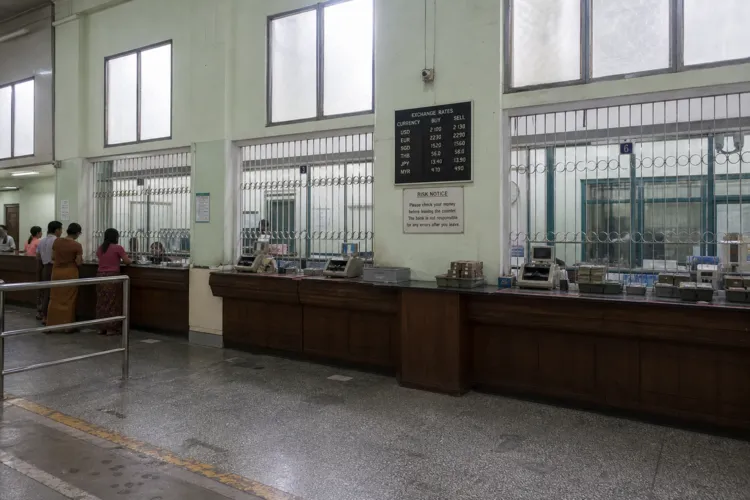
Myanmar’s mobile money and digital payments market in 2026 is best described as a fast-moving transition rather than a finished cashless story. One Myanmar-focused overview frames the shift as an “inflection point,” driven by mobile technology adoption, evolving regulation, and changing consumer behavior. It describes digital payments across mobile wallets such as KBZPay and QR code transactions at local markets, alongside solutions designed for low-bandwidth environments and user interfaces that work across different literacy levels. The same source also notes financial inclusion initiatives that bridge urban-rural divides through agent banking networks, plus a push toward cross-border payment integration with ASEAN neighbours.
Historically, the same Myanmar overview traces the starting point to basic mobile money services around 2016–2017, when operators like Wave Money introduced USSD-based transfers between feature phones. It argues that what began as person-to-person transfers has evolved into broader ecosystems that include bill payments, merchant transactions, and even micro-savings products. For stakeholders planning a product roadmap, this history matters because it highlights how Myanmar’s market built momentum under infrastructure constraints, then expanded use cases as networks and digital habits improved. For teams doing Myanmar fintech consulting, the practical takeaway is to design for mixed device realities and incremental adoption, not just app-first assumptions.
What 2026 Behavior Looks Like in E-Commerce Checkouts
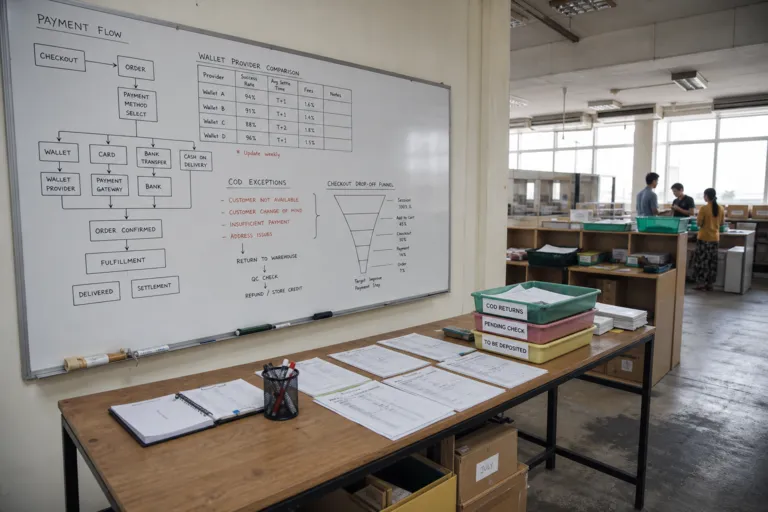
Myanmar’s e-commerce payments in 2026 show how digital wallets scale while cash remains deeply embedded. A Myanmar e-commerce market overview states that nearly all remaining players offer cash-on-delivery and mobile wallet payments, and that e-commerce “still relies on these.” It adds that advance-payment (card online) is growing but not dominant, and explicitly links the situation to relatively low card penetration. The same report cites widely used mobile wallet options including Wave Money and KBZPay. It also reports that Myanmar’s online retail market is growing rapidly at about a 13% CAGR through 2027, alongside internet penetration of about 44% (around 24 million users), and notes Facebook’s dominance at about 15 million users and 85% of internet traffic—factors that shape how merchants acquire customers and manage trust.
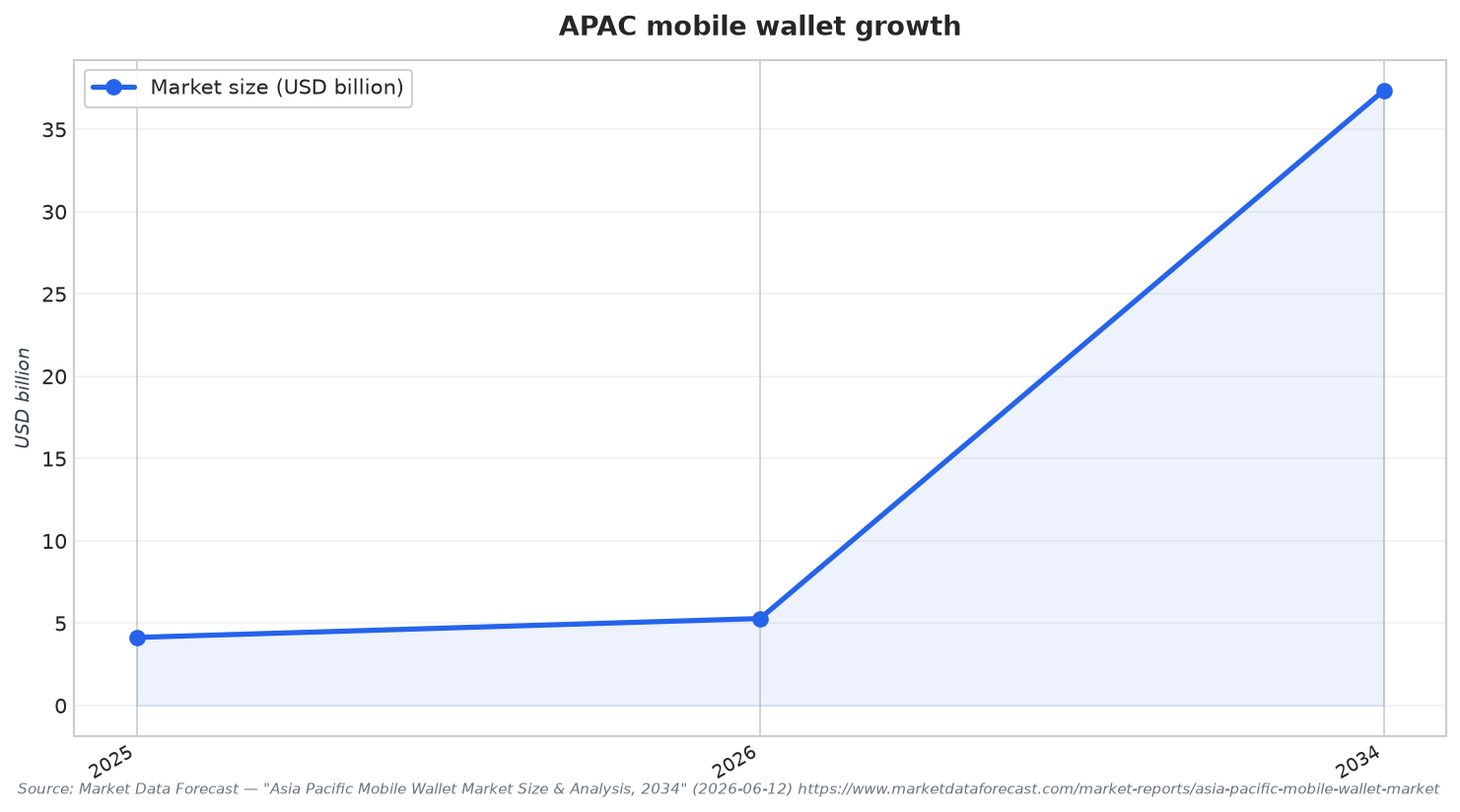
Regional context helps frame Myanmar’s payment rails without mislabeling Asia-wide figures as local facts. A 15-market Asia tracker lists Myanmar’s dominant rail as KBZPay and argues that, across Asia, domestic rails built by central banks or local platforms are often structurally more relevant than global card networks. The tracker gives India as the extreme example: in December 2025, India’s UPI processed 21.63 billion transactions in one month (about 698 million per day), and across 2025 ran 228 billion transactions worth roughly $3.6 trillion, representing 85% of digital payments inside India and around 50% of the world’s real-time digital payment volume. Separately, an Asia Pacific mobile wallet market report estimates the regional market at USD 5.29 billion in 2026, up from USD 4.14 billion in 2025, projecting USD 37.36 billion by 2034 with a 27.69% CAGR (2026–2034). These are not Myanmar numbers, but they set expectations for competitive intensity and wallet-led innovation in the wider region.
For 2026 planning, the sources consistently point to a blended payment reality: wallet growth alongside operational dependence on cash-on-delivery, plus policy and infrastructure shifts that keep changing the addressable market. The Myanmar overview highlights “progressive regulations” by the Central Bank of Myanmar intended to balance innovation with stability, and it emphasizes agent banking networks as a bridge between urban and rural users. Meanwhile, e-commerce checkout behavior shows why merchants keep supporting both cash and wallets, even as online retail expands. The clearest strategic posture is to optimize for wallet acceptance, COD workflows, and QR-based merchant payments, while monitoring cross-border integration trends that the Myanmar overview associates with ASEAN economic corridors.
Which payment methods do Myanmar e-commerce players rely on in 2026?
Which mobile wallets are referenced for Myanmar in the sources?
What does the Myanmar-focused overview say about how mobile money started?
How can Myanmar fintech consulting teams use Asia-wide payment benchmarks without misreading them as local data?
What are the key digital adoption signals cited for Myanmar’s online retail market?