Demand for heavy machinery and rental services in Myanmar during 2026 is shaped by a complicated construction cycle. Myanmar’s construction industry is forecast to contract by 0.6% in real terms in 2026, reflecting political instability, geopolitical trade tensions, and weaker investor confidence. At the same time, the country recorded MMK835.8 billion ($398 million) in foreign direct investment (FDI) in the first 10 months of FY2025-26 (April 1, 2025, to March 31, 2026), according to DICA. That figure is explicitly presented alongside an estimate that conditions weakened in February and March 2026 amid heightened uncertainty, which can affect project schedules and, in turn, equipment rental utilization.
For the Myanmar construction equipment rental market, equipment availability and cost sensitivity matter because multiple categories are described as import-dependent and distributed through fragmented channels. IndexBox characterizes Myanmar’s market for scrapers and related earth-moving, excavating, and extracting machinery (not self-propelled) as high in import dependence with a fragmented distribution landscape, spanning authorized distributors, independent dealers, rental companies, and informal traders. It also notes that hundreds of smaller operators absorb demand through the used market and rental channels, while a small number of large mining companies and construction firms account for a disproportionate share of unit purchases. This structure can concentrate high-hour utilization with a few large accounts while keeping day-to-day rental demand broad but price-aware.
What 2027-2030 Recovery Signals Mean for Fleet Planning
Looking beyond 2026, Myanmar’s construction industry is expected to grow by 4.4% in real terms during 2027 to 2030, supported by investments in manufacturing, transport, and renewable energy. The energy angle is tied to Myanmar’s National Electrification Master Plan, which aims to increase electricity production capacity from approximately 6,000MW in 2024 to 12,000MW by 2030. For rental companies and contractors, that recovery profile can influence what gets prioritized: earthworks and site prep ahead of civil packages, plus equipment uptime and maintenance support when logistics risks rise. The same GlobalData coverage also flags risks to Myanmar’s oil imports from escalating conflict starting February 28, 2026, a factor that could raise operating costs and pressure delivery schedules.
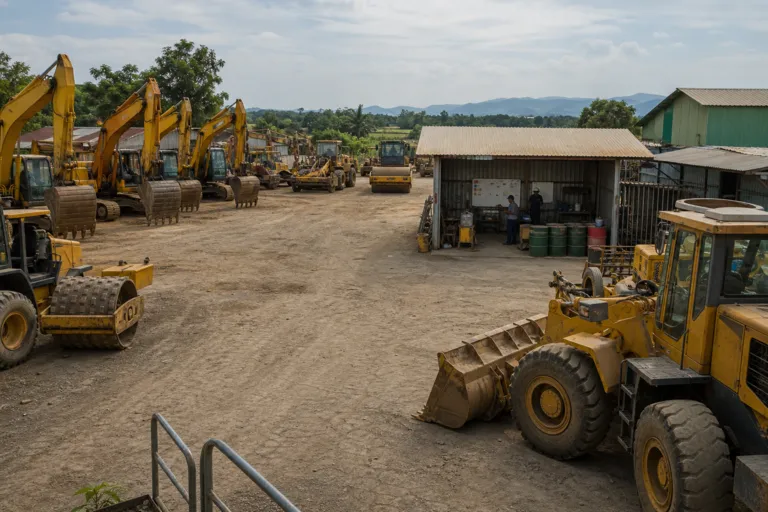
Equipment-category signals also point to uneven near-term demand. In Myanmar’s boring or sinking machinery segment, IndexBox reports the market decreased in 2025 and fell for the fifth year in a row after two years of growth, with consumption peaking in 2019 and failing to regain momentum from 2020 to 2025. While the report uses placeholders for several figures, the direction is clear: some specialized machinery demand has been under pressure. In contrast, the scrapers and related non-self-propelled earthmoving category is expected to grow over the 2026-2035 horizon in the low-to-mid single digits annually, with cumulative volume expansion of 25-45% under a moderate recovery scenario. That mix suggests rental fleets may lean toward flexible earthworks assets that can pivot across construction, mining, and infrastructure workloads.
Regional context from ASEAN helps clarify how rental models may evolve, without implying those numbers are Myanmar-specific. Mordor Intelligence values the ASEAN construction equipment rental market at USD 5.05 billion in 2025 and estimates growth to USD 5.4 billion in 2026 and USD 7.57 billion by 2031, at a 6.98% CAGR for 2026-2031. Within ASEAN in 2025, earthmoving equipment led with a 46.05% revenue share, short-term contracts under six months captured 62.60% share, and infrastructure held a 38.10% end-user share. These benchmarks matter for Myanmar operators because they highlight where rental demand often clusters during rebuilding: earthmoving-heavy scopes, infrastructure-led utilization, and contract structures that favor short durations while projects remain volatile.
What is the near-term outlook for the Myanmar construction equipment rental market in 2026?
Which equipment categories look better positioned for rental demand during rebuilding?
How does Myanmar’s construction outlook connect to energy-related equipment needs?
What does ASEAN rental data suggest about contract patterns that could matter to Myanmar operators?