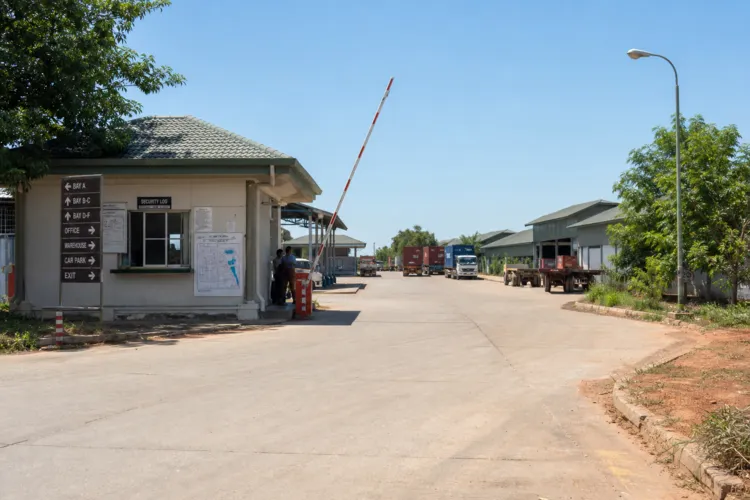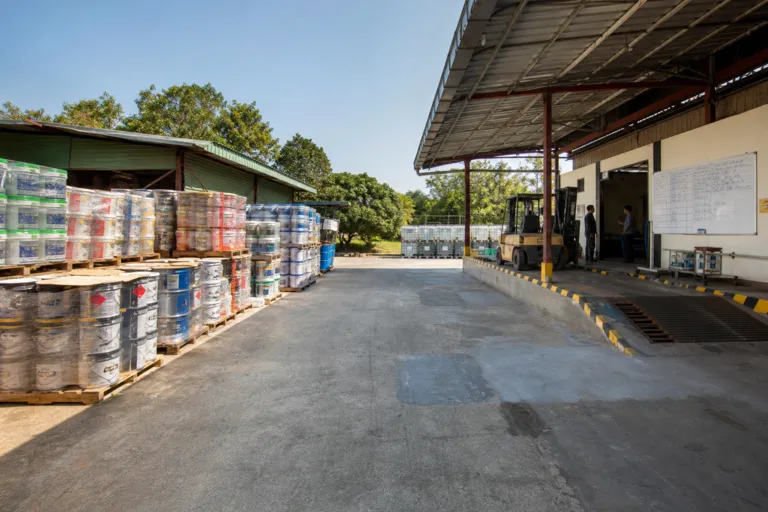
Myanmar’s 2026 outlook for decorative and industrial paints is best read through its end-use structure and supply dynamics. Coatings World reports that low-rise construction is beneficial for architectural paint producers because paint demand by volume is higher across multiple low-rise buildings than a single high-rise structure. The same source also notes that, compared to almost all countries in the region, the industrial segment’s share of the overall coating industry is the smallest in Myanmar. That mix matters for demand planning because it points to decorative paints taking the lead in everyday volume, while industrial coatings remain a smaller, more selective pool tied to specific projects and supply chains.
Supply and trade patterns also shape what demand means in practice. Coatings World states that Myanmar’s coating industry is dominated by foreign coating producers, accounting for more than 70% of total domestic output and supply, and identifies key players such as domestic company UPG Paint & Coating Industry alongside Toa Paints, Kansai, Nippon Paints, and AkzoNobel. It also highlights that imports form a significant proportion of Myanmar’s coating demand, with Thailand, Vietnam, Malaysia, and China (in that order) being major importing countries. An executive from UPG added that imports of coating products increased substantially after 2021. For 2026, this combination implies that availability, pricing, and product mix can be influenced as much by cross-border supply as by local consumption patterns.
What Global Paint Trends Suggest for 2026 Product Mix
Global indicators help frame what product categories are likely to be pulled into Myanmar through imports and multinational portfolios. Future Market Insights estimates the global decorative paints market at USD 73.9 billion in 2026, forecasting a 5.1% CAGR from 2026 to 2036 and a rise to USD 121.5 billion by 2036. In the same 2026 snapshot, FMI expects water-based paints to lead product type at 71.4% versus 28.6% for solvent-based paints, with emulsion-based paints at 82.6% of formulation sales and distemper at 17.4%. It also estimates interior paints at 62.3% of application sales versus 37.7% for exterior paints, while offline channels account for 89.2% compared with 10.8% online. These ratios are global, not Myanmar-specific, but they provide a practical reference for what many suppliers may prioritize when serving markets that still buy heavily through traditional channels.
Across the broader global paints and coatings space, Grand View Research projects the global market to grow from USD 231.1 billion in 2026 to USD 333.6 billion by 2033 at a 5.4% CAGR, after valuing it at USD 219.9 billion in 2025. GVR also states that Asia Pacific held 35.4% of revenue in 2025 and that waterborne coatings dominated by product with a 40.9% revenue share in 2025. Fact.MR offers a separate global view, projecting USD 191.95 billion for 2026 and stating that acrylic resin accounts for 40% share in 2026, while architectural end use holds 55% share. For the Myanmar paints and coatings market, these global signals align with an architecture-led demand base and continued pull toward waterborne and acrylic-based systems, especially where imported products and foreign-owned supply are influential.
Finally, upstream pigment conditions can affect paint economics even when local market values are not disclosed. IndexBox reports that Myanmar’s titanium dioxide pigments market decreased in 2025 for the second year in a row after two years of growth, and that consumption peaked in 2022 before failing to regain momentum from 2023 to 2025. It also notes that titanium dioxide pigments exports totaled an unchanged level in 2025 versus the prior year, with Thailand and China listed as key export destinations. Because titanium dioxide is a core pigment input for many decorative products, these movements highlight why import reliance and supplier strategies matter to 2026 demand outcomes: buyers may see the market through availability and product mix, not just project counts, with decorative volumes likely benefiting more directly from Myanmar’s construction profile than industrial coatings do.
What is the biggest driver of paint demand volume in Myanmar’s 2026 outlook?
How important is industrial coatings demand in Myanmar compared with nearby countries?
How much of Myanmar’s coating supply is controlled by foreign producers?
Which countries are major sources of coating product imports into Myanmar?
What global trend is most relevant to the Myanmar paints and coatings market heading into 2026?