
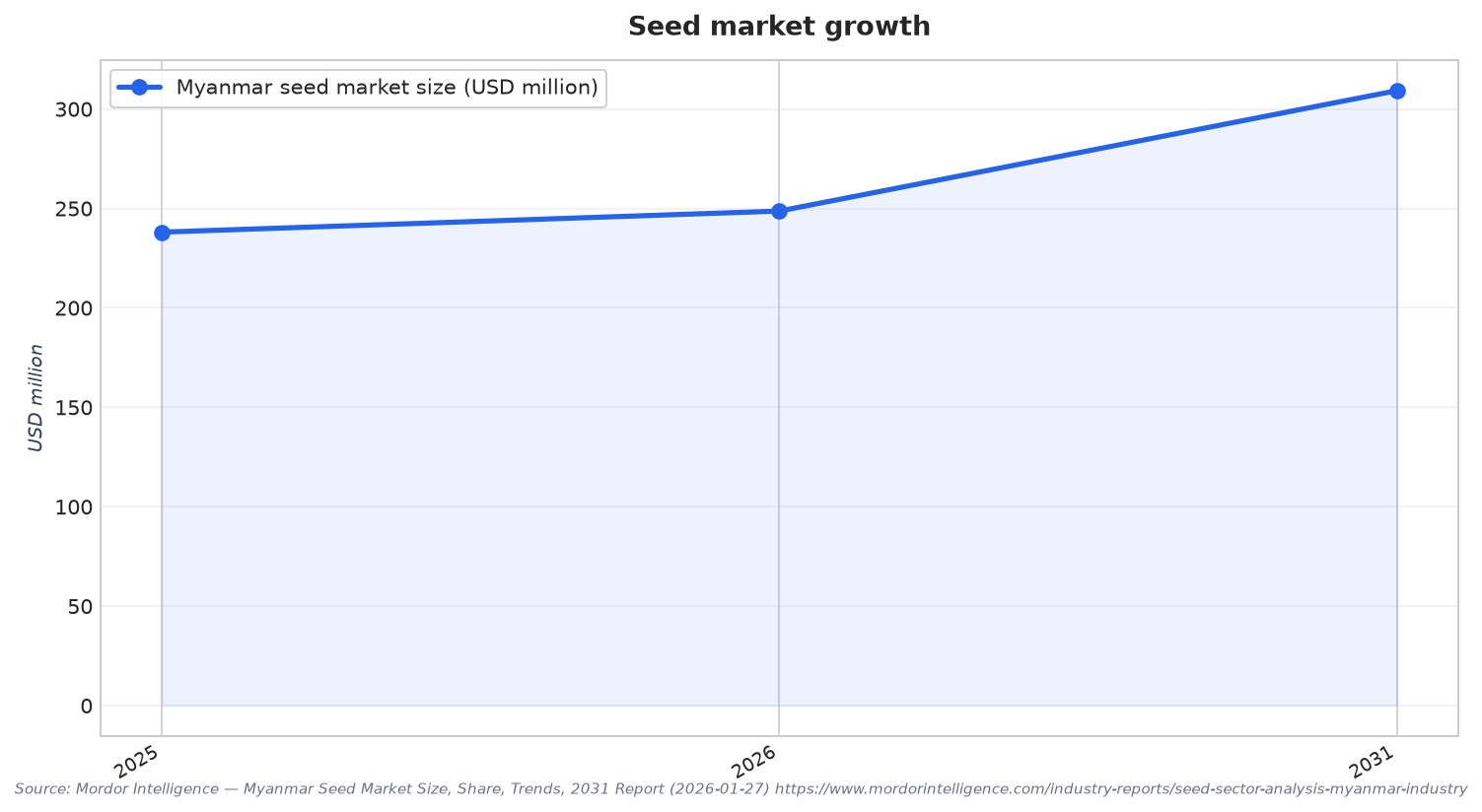
In 2026, discussion of the Myanmar agritech market increasingly centers on the practical building blocks that enable adoption: better seed, stronger traceability, and equipment access that fits fragmented farms. Mordor Intelligence estimates Myanmar’s seed market at USD 248.7 million in 2026, up from USD 238.10 million in 2025, with a forecast to reach USD 309.27 million by 2031 at a 4.45% CAGR. Hybrid seeds are described as dominant, with a 72.64% share in 2025. These figures matter for agritech because seed decisions are often the first “data-driven” choice a farmer makes, and they create demand for advisory services, quality assurance, and financing tied to input packages.
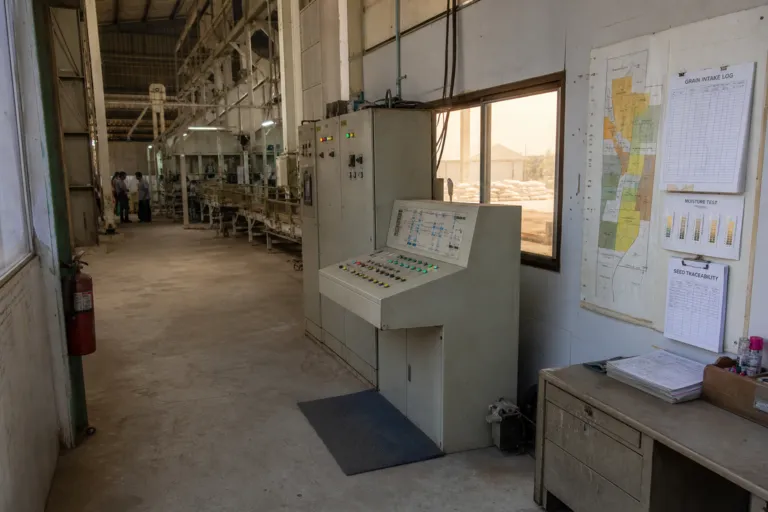
Policy and platform changes are also tightening the link between formal inputs and bankable records. In 2025, Myanmar’s Department of Agriculture accelerated seed-law reform and launched a fast-track import-permit window that clears planting-material certificates within three working days. The same source notes registration mandates under the Myanmar Rice Online platform, improving traceability across 726 large warehouses and supporting certified-seed distribution. For digital farmer credit, that combination—faster certification plus more transparent movement through large storage nodes—creates clearer documentation for lenders or input suppliers that extend credit. It also reduces transaction risk for private breeders, which can influence how credit-like terms (such as buy-back guarantees) are structured in the field.
Where Precision Agriculture Meets Inputs, Mechanization, and Finance
On-farm performance evidence is one of the strongest catalysts for adoption and for credit confidence. In Lewe Township, certified seed adopters achieved 4.05 metric tons per hectare versus 3.37 metric tons for non-adopters, and returns above total variable cost reached USD 428 versus USD 136, respectively. The same source reports certified seed users captured a USD 48 premium per metric ton over conventional grain. Separately, international support is targeting scale: the Global Innovation Fund’s grant to Proximity Designs (September 2024) supports “No-Burn Rice Farming” solutions targeting 46,000 rice farmers. For agritech lenders and service providers, these kinds of yield, margin, and premium signals are the underlying “repayment logic” that can justify bundled input credit and pay-at-harvest structures.
Mechanization provides another channel for agritech services and credit products, especially contractor-based models. Ken Research values the Myanmar agricultural machinery market at USD 112 million in 2025 and projects expansion to USD 161 million by 2031, with a forecast CAGR of 6.2%. Rice remains the mechanization anchor, with harvested area reaching 6.86 million hectares in 2024–2025. The report notes that value capture will increasingly depend on financing, parts availability, and contractor-oriented sales, rather than equipment imports alone, and it projects new-machinery unit sales at approximately 57,200 units in 2031 with a modeled average selling value of approximately USD 2,815 per unit. Those dynamics naturally support digital credit workflows tied to utilization, service history, and seasonal cash flow.
Precision agriculture, as a category, is still best benchmarked with global figures rather than Myanmar-specific market sizing in the provided sources. MarketsandMarkets projects the global precision farming market to grow from USD 11.97 billion in 2026 to USD 23.07 billion by 2033 at a 9.8% CAGR, while Grand View Research projects USD 16.8 billion in 2026 rising to USD 38.8 billion by 2033 at a 12.7% CAGR (and states $15.1 billion in 2025). Market Research Future frames Asia-Pacific as highly heterogeneous, ranging from Japanese robotic farms to SMS-based crop advisories in rural Myanmar, and notes China’s “Digital Village” initiative targets 80% smart agriculture coverage in major grain-producing provinces by 2030. For Myanmar-focused operators in 2026, the practical takeaway is that software-led models, subscription packaging, and data-linked services are becoming the dominant pattern globally, even if local adoption pathways start with simpler advisories and traceability-linked input systems.
What is the 2026 outlook for Myanmar’s agritech market from a seed perspective?
Which reforms improved seed traceability and could support digital farmer credit?
What on-farm results are cited for certified seed adoption in Myanmar?
How large is Myanmar’s agricultural machinery market, and what is the projected growth?
What do the sources say about precision farming growth, and is it Myanmar-specific?