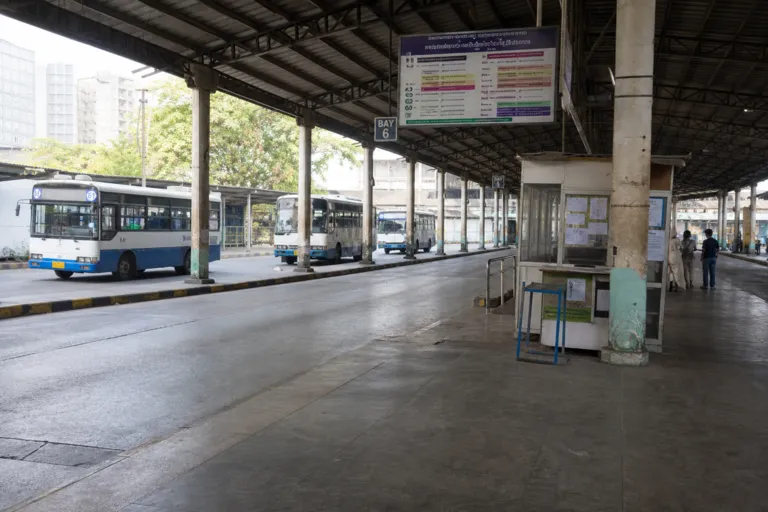
Yangon’s daily mobility story in 2026 is still built around buses. Yangon Bus Service (YBS) began operations on 16 January 2017 as a citywide bus transport network serving Yangon, Myanmar’s former capital. The system was first operated by the Yangon Region Transport Authority (YRTA) until the organisation was abolished on 20 May 2021 and reorganized as the Yangon Region Public Transport Committee (YRTC). For visitors and residents, that governance shift matters because it frames how the city manages routes, service rules, and future upgrades across the bus network.
Before the YBS overhaul, the city’s bus network was overseen by the Yangon Motor Vehicles Supervisory Committee, known locally as “Ma Hta Tha.” That legacy network served a majority of the city’s 2.8 million commuters daily. At the time, 7,800 buses were registered in Yangon, and 4,000 buses plied the streets each day across over three hundred bus lines. YBS reduced the old network’s 300 lines to 100, while also splitting some similar-number routes so the practical numbering runs around 130 lines. Another travel guide also describes “over 130 bus lines” operating around Yangon under YRTC through YBS, with over 2 million commuters a day.
What’s Changing for Riders: Payments, BRT, and Service Pressures
For riders, payment and corridor upgrades are part of the ongoing modernization story. Yangon implemented its first bus rapid transit system, the Yangon BRT, in February 2016, operated by Yangon Bus Public Company Limited. On everyday buses, YBS introduced options beyond cash: beginning in January 2020, passengers can pay with cash or smart cards. YBS also planned to install the Yangon Payment Service card system in 4,000 buses in 2019, and Asia Starmar Transport Intelligence Co. won the tender to install the card payment system. Even with these steps, YBS has received criticism for being ill-equipped to serve commuters, including shortages of buses, misconduct of bus staff, and constant traffic-rule violations; lawmakers from Yangon Region Parliament called for a transparent review on 7 April 2017.
Bus performance in Yangon also has to be read alongside broader national transport conditions. Transport in Myanmar is characterized by strong reliance on road transport for both passengers and freight, with other modes playing secondary roles. The condition of Myanmar’s roads is generally poor: Ministry of Construction statistics from 2015 state that only about 20% are paved with asphalt or concrete, with the rest gravel, unpaved roads, or even simple trails. Myanmar has also used Build-Operate-Transfer (BOT) road construction, with 4,752 kilometres of roads nationwide adopting the BOT model, including routes such as the Yangon–Meiktila–Mandalay Highway. This road context influences the Myanmar urban transport market discussion because bus reliability, travel time, and operating costs are shaped by road conditions and congestion.
Within Yangon, buses remain central because alternatives are limited in capacity and coverage. A transport overview describes Yangon urban transport as largely reliant on a bus system, supported by a radial road network, narrow secondary streets, and a small, outdated 50 km railway serving only 1% of trips. Congestion has intensified as vehicle numbers doubled from 160,000 in 2011 to 320,000 in 2015, while motorcycles are banned in Yangon; the same source reports average speeds fell from 30 km/h to 10–15 km/h. In this environment, network design, rider information, and vehicle condition become critical. A Yangon-focused survey paper highlights problems in urban bus transportation, including poor vehicle condition, an inadequate bus network, unsatisfactory service information, lack of a financial support system, and deficiencies in bus regulation.
Who operates Yangon Bus Service in 2026?
How many bus lines run in Yangon under YBS?
What do sources say about daily bus demand in Yangon?
What payment options are available for YBS riders?
What Yangon factors shape the Myanmar urban transport market outlook?