Spare parts and aftermarket demand in Myanmar in 2026 sits inside a fast-changing vehicle landscape. Year-to-date vehicle sales up to April 2026 grew by 187.8%, based on Myanmar vehicle-industry reporting. In the same period, EV sales rose by 228.8% and reached a 64.1% share, which signals that workshop capabilities and parts sourcing will need to evolve alongside the parc. Brand and model momentum also matters for parts planning. BYD held a 22.2% share (up 185.7%), and Geely rose to a 12.9% share after gaining 6725%. On the model side, the Toyota bZ4X led with a 9% share, while the BYD Seagull reached a 6.2% share after growing by 490.9%.
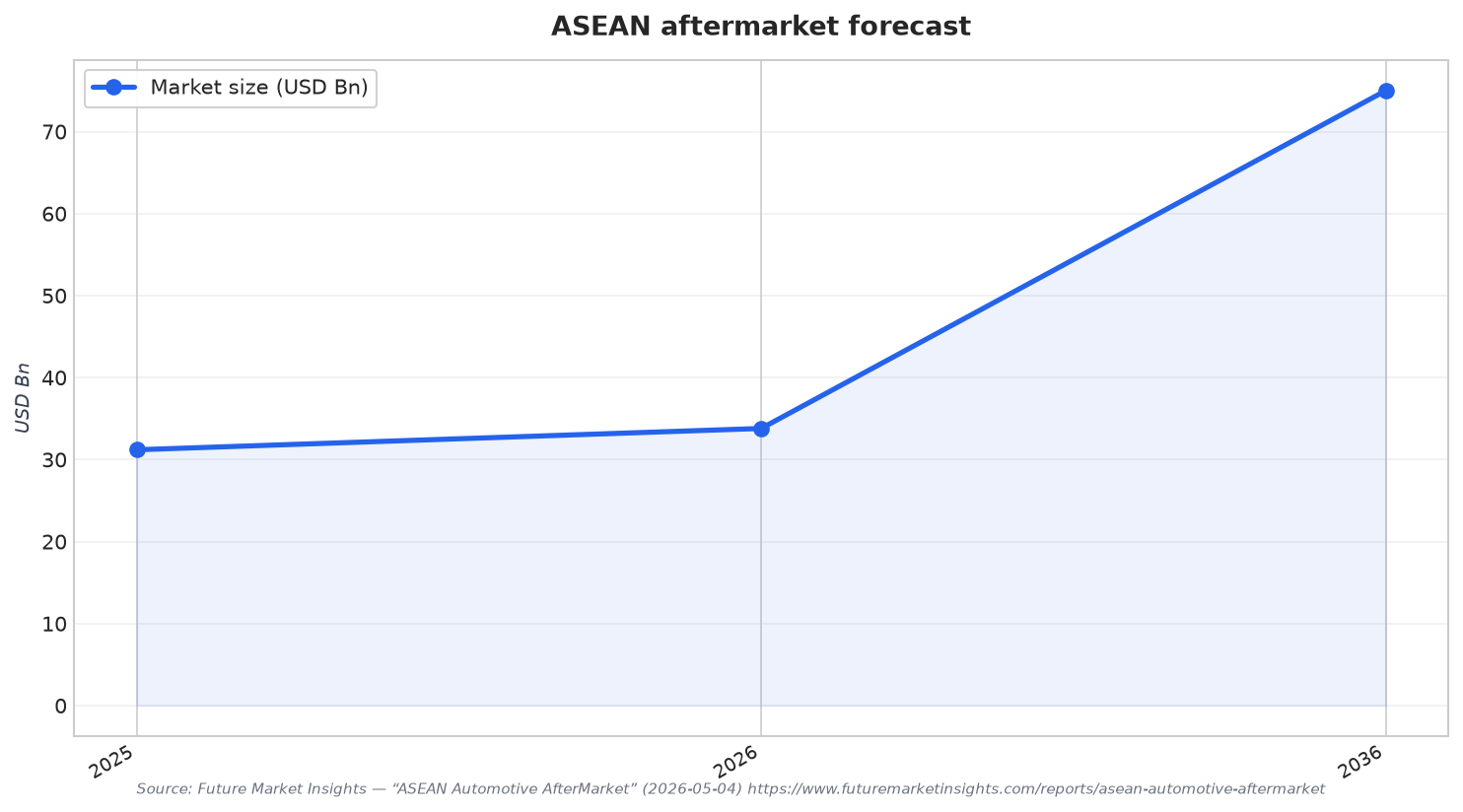
Because local Myanmar-specific aftermarket sizing is not provided in the sources, ASEAN benchmarks help set context without substituting for local facts. Future Market Insights values the ASEAN automotive aftermarket at USD 31.2 billion in 2025 and projects it to cross USD 33.8 billion in 2026, reaching USD 75.0 billion by 2036 at an 8.3% CAGR. For channel strategy, offline traditional distribution is predicted to hold a 72.0% share in 2026, and DIFM (Do It for Me) is expected to be the dominant service type with a 68.0% share in 2026. The same outlook expects passenger cars to lead vehicle type demand with a 66.0% share in 2026, while individual owners represent an estimated 57.0% of customer-type demand in 2026.
What 2026 Means for Parts Mix, Channels, and Lead Times in Myanmar
In parts planning, ASEAN product signals offer a practical reference point for distributors and workshops building 2026 inventory plans for Myanmar. Future Market Insights anticipates engine components at around a 25.0% share in ASEAN, framing how high-wear systems can dominate routine replacement cycles where vehicles see heavy use. At the global level, Grand View Research reports the tire segment captured a 23.2% revenue share in 2025, which is useful context for fast-moving replacement categories. Those global and regional indicators do not quantify Myanmar demand, but they highlight why operators often balance “urgent repair” staples with deeper assortment for higher-value systems as the vehicle base and service expectations shift.
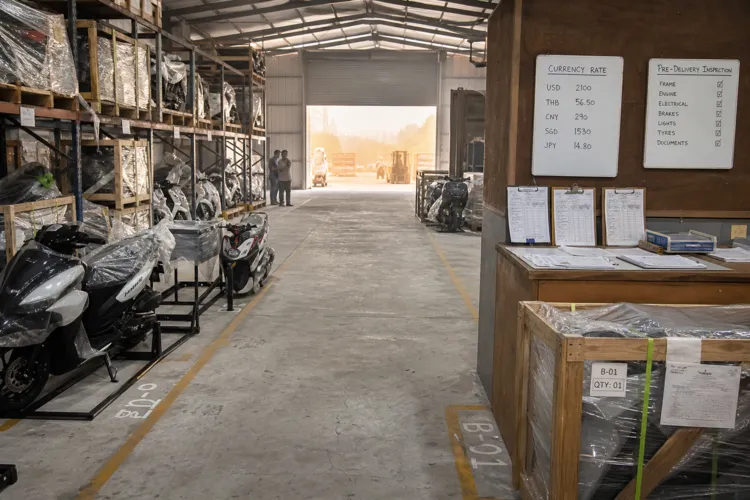
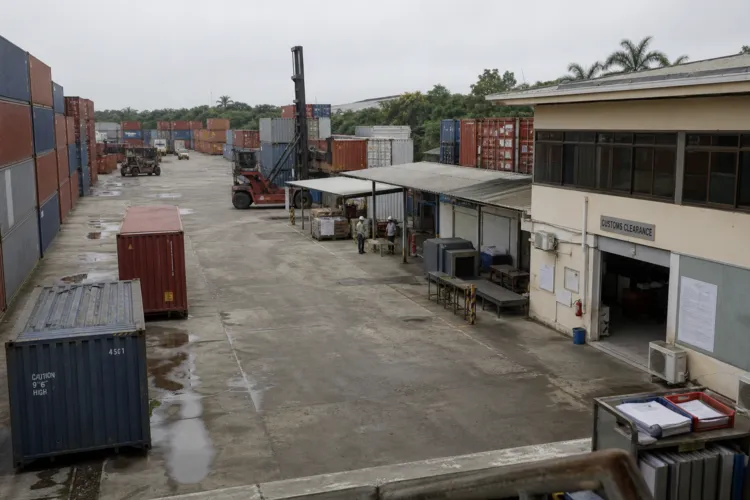
Beyond passenger vehicles, specialized fleets can pull in different types of parts and workshop services. IndexBox’s 2026 report on bodies for special purpose motor vehicles in Myanmar describes the market as structurally import-dependent, estimating 75–90% of specialized vehicle bodies arrive as complete units or chassis-cab imports rather than being fabricated domestically. It also estimates that three end-use clusters—public health and emergency services, construction and infrastructure, and logistics/utilities—account for 65–80% of specialized body demand by unit volume. The same source notes foreign-exchange controls and import licensing delays can create 2–6 month lead-time variability for chassis-cab and specialized body imports, which can affect procurement cycles and working-capital needs across the supply chain.
Myanmar’s outlook is also shaped by macro and cross-border comparisons, as long as the scope is kept clear. Myanmar’s GDP is expected to increase by 2.4% in 2026 and 2.7% in 2027, while per capita GDP growth is forecast at 1.7% and 2.0%, respectively, alongside severe economic challenges and high inflation. Globally, estimates differ by source: Precedence Research projects the aftermarket automotive parts market to grow from USD 903.04 billion in 2026 to USD 1,482.12 billion by 2035 at a 5.59% CAGR, while Grand View Research projects USD 509.8B in 2026 to USD 643.8B by 2033 at a 3.4% CAGR. For the Myanmar auto parts market conversation in 2026, the actionable takeaway is less about picking one global number and more about aligning assortment, service capability, and sourcing resilience with Myanmar’s rapid vehicle-sales shift and practical import lead times.
What signals suggest higher aftermarket activity in Myanmar during 2026?
Which service and channel formats dominate the ASEAN aftermarket in 2026?
How import-dependent is Myanmar for specialized vehicle bodies, and why does it matter for parts and service?
Which product categories stand out in the cited regional and global aftermarket data?
What should businesses track when assessing the Myanmar auto parts market in 2026?