
The Myanmar Dry Port Logistics 2026 story gained momentum on 17 July. The Mandalay Commercial Complex at Myitnge Dry Port began offering export-related support through a One-Stop Service system.
The new service is designed to make export procedures easier for businesses in Mandalay Region. Discussions at the launch covered direct overseas shipments of corn and sugar. They also covered rail transport for containers moving from Myitnge to Yangon Dry Port and designated seaports.
This is an important step for Myanmar’s inland logistics system. Myitnge is not located beside a seaport. It allows goods to begin their export journey from Mandalay before travelling south by rail.
The model can bring several logistics activities closer together. Exporters may complete procedures, prepare cargo, arrange customs clearance, and organise rail transport through a more connected process.
This does not mean every export challenge has been solved. Businesses still need reliable schedules, suitable containers, clear documentation, and coordination between inland terminals and seaports. However, the One-Stop Service gives exporters a more structured starting point.
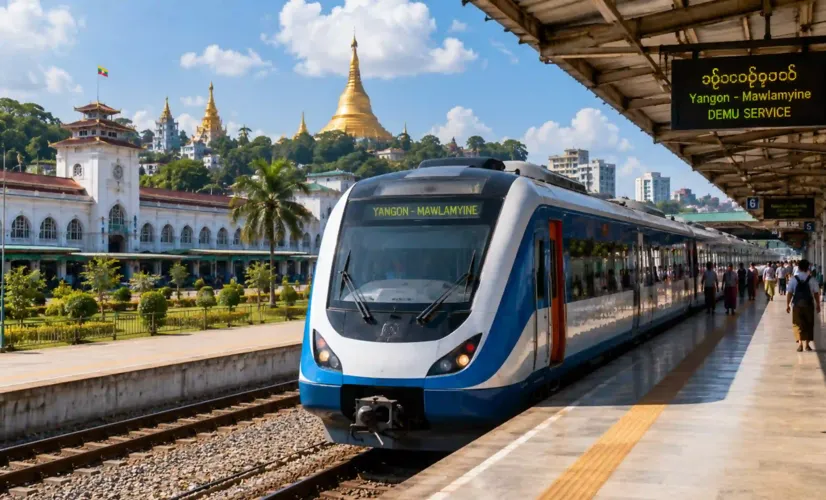
Myanmar’s dry-port strategy began before 2026. Myitnge and Ywar Thar Gyi in Yangon were developed as linked inland logistics hubs. Freight trains were planned to move between the two facilities, connecting Upper Myanmar with ports and cargo networks in the Yangon area.
When Myitnge opened, officials said it could make the movement of goods to and from Mandalay easier and cheaper. Dry ports were also positioned as a way to improve Myanmar’s logistics network, reduce pressure on roads, and speed up cargo movement between ports and major land transport routes.
From Inland Storage to a Rail-Linked Export Platform
The July launch shows how the role of Myitnge is developing. A dry port is more valuable when it does more than store containers. Its wider role is to connect producers, exporters, customs services, rail operators, warehouses, and maritime ports.
This model had already begun handling real export flows before the One-Stop Service announcement.
From February 2026, RGL Dry Port supported a direct yellow corn export project from Myitnge in Mandalay to Davao in the Philippines. Export customs clearance was completed at Myitnge. The cargo was then transported by rail to Myanmar International Terminals Thilawa in Yangon before continuing overseas.
The shipment offers a practical example of inland-to-sea logistics. Agricultural products from Central Myanmar did not need to begin every export procedure at the coast. Cargo preparation and customs work could start closer to the production area.
The July discussions about corn and sugar suggest that agricultural exports remain a key use case. These products require more than transport. Exporters also need cargo consolidation, quality checks, suitable storage, container handling, documentation, and predictable links to loading ports.
A stronger dry-port system could support each of these activities. It may also help logistics providers develop services around rail freight, bonded storage, customs support, cargo tracking, container handling, and export documentation.
For businesses, the main benefit is better coordination. A fragmented process can create delays when exporters must deal separately with warehouses, customs teams, transport providers, and port operators. A one-stop model aims to connect these steps more clearly.
The linked Myitnge–Yangon structure is also important. Yangon and Mandalay serve different parts of the national economy. Rail freight between their dry ports can connect inland production areas with river ports, Thilawa, and international shipping services.
The development should still be viewed realistically. One facility cannot modernise Myanmar’s entire logistics sector. Its impact will depend on service reliability, rail capacity, customs efficiency, exporter participation, and strong coordination with Yangon ports.
Yet the direction is positive. Myitnge has moved beyond being only an inland storage point. It is becoming a practical export gateway supported by customs clearance, rail transport, and one-stop services.
For Myanmar Dry Port Logistics 2026, that is the central opportunity. Better links between Mandalay and Yangon can help exporters organise cargo more efficiently, reduce fragmented processes, and build a clearer route from inland production centres to overseas markets.