
Client
Issues
Passenger demand varied considerably between routes, departure times, and days of operation. Some services on regional routes ran below viable capacity, while peak departures between Yangon and Mandalay frequently had insufficient seats. Fleet allocation was based largely on historical practice, and management lacked a consistent view of route economics, passenger preferences, and changing travel patterns.
Solution
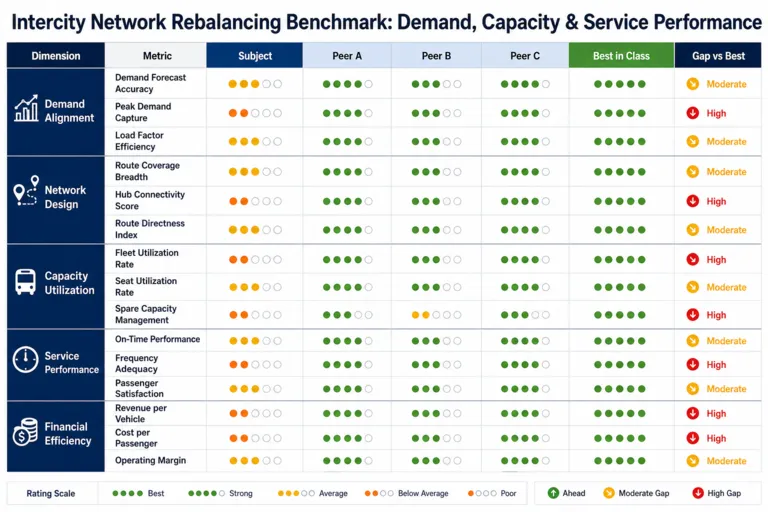
We developed a route and service optimisation plan combining operational analysis, passenger research, competitor benchmarking, and network redesign. The objective was to improve capacity allocation while maintaining access between Myanmar’s main commercial centres and regional destinations.
Approach
We reviewed ticketing, fuel, maintenance, fleet, and departure data across priority routes. Passenger interviews explored journey purpose, booking behaviour, price sensitivity, preferred departure times, and service expectations. Competitor schedules and fares were mapped, while observations at terminals in Yangon, Mandalay, and selected regional locations identified avoidable delays in boarding and dispatch.
Recommendations
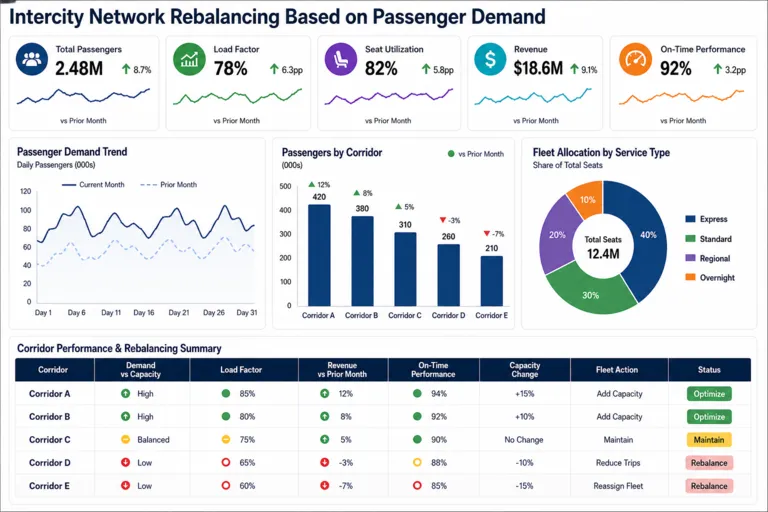
We recommended consolidating selected low-demand departures, reallocating vehicle sizes, and introducing timed connections through two regional hubs. The client was also advised to simplify digital booking, improve departure notifications, and introduce route-level performance dashboards. Changes were initially tested across three priority corridors.
Engagement ROI
The pilot increased average passenger load factors by nine percentage points and reduced fuel cost per passenger by approximately 7%. More consistent dispatch procedures also improved on-time departures. The operator maintained access to regional destinations while using its existing fleet more efficiently.