
Client
Issues
Testing demand differed by location, medical specialty, referral source, and patient affordability. Opening multiple laboratories would require substantial investment in equipment, qualified personnel, quality control, and maintenance. Sample transportation and turnaround times also created operational challenges for serving markets outside Myanmar’s largest healthcare centres.
Solution
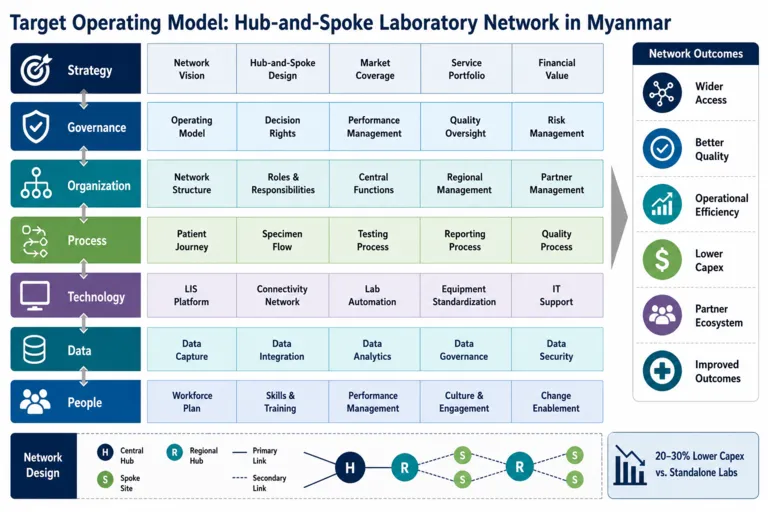
We developed a hub-and-spoke network strategy centred on a regional laboratory hub in Mandalay, supported by smaller collection centres and scheduled sample collection from partner clinics. The model was designed to expand access across central and upper Myanmar while maintaining quality and controlling capital expenditure.
Approach
We mapped hospitals, clinics, laboratories, specialist practices, and referral networks in Mandalay and selected surrounding cities. Interviews with physicians and healthcare administrators examined unmet testing needs, referral patterns, price expectations, and quality concerns. We also reviewed competitor services and assessed practical sample-transport routes, handling requirements, and turnaround times.
Recommendations
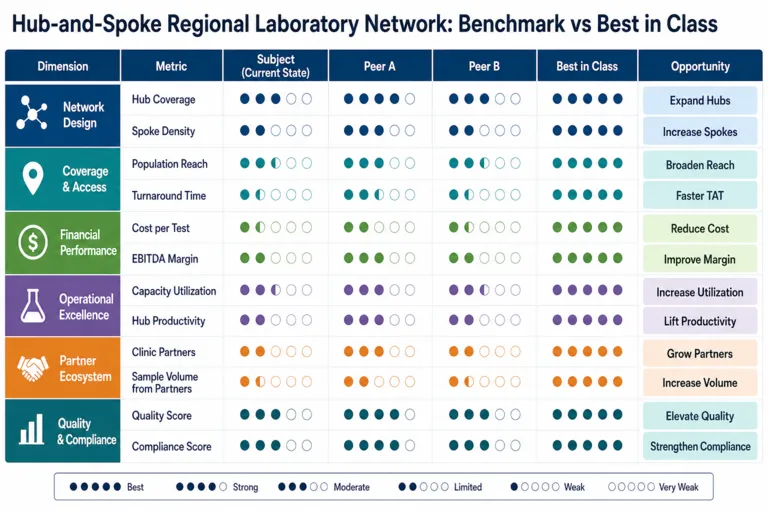
We recommended establishing one processing hub in Mandalay supported by three collection centres rather than four fully equipped laboratories. The initial test portfolio focused on routine diagnostics and specialist tests with consistent referral demand. Clinic partnerships and clear sample-handling standards were prioritised before direct-to-consumer expansion.
Engagement ROI
The recommended structure reduced estimated initial investment by approximately one-third compared with the original expansion plan. It also improved projected equipment utilisation and provided a more scalable approach to regional growth. The client entered partnership discussions with several clinics before committing to new facilities.